Roofing contractor serving Canton, CT
What to ask a roofing contractor in Canton, CT, and what a written quote should itemize before any work starts.
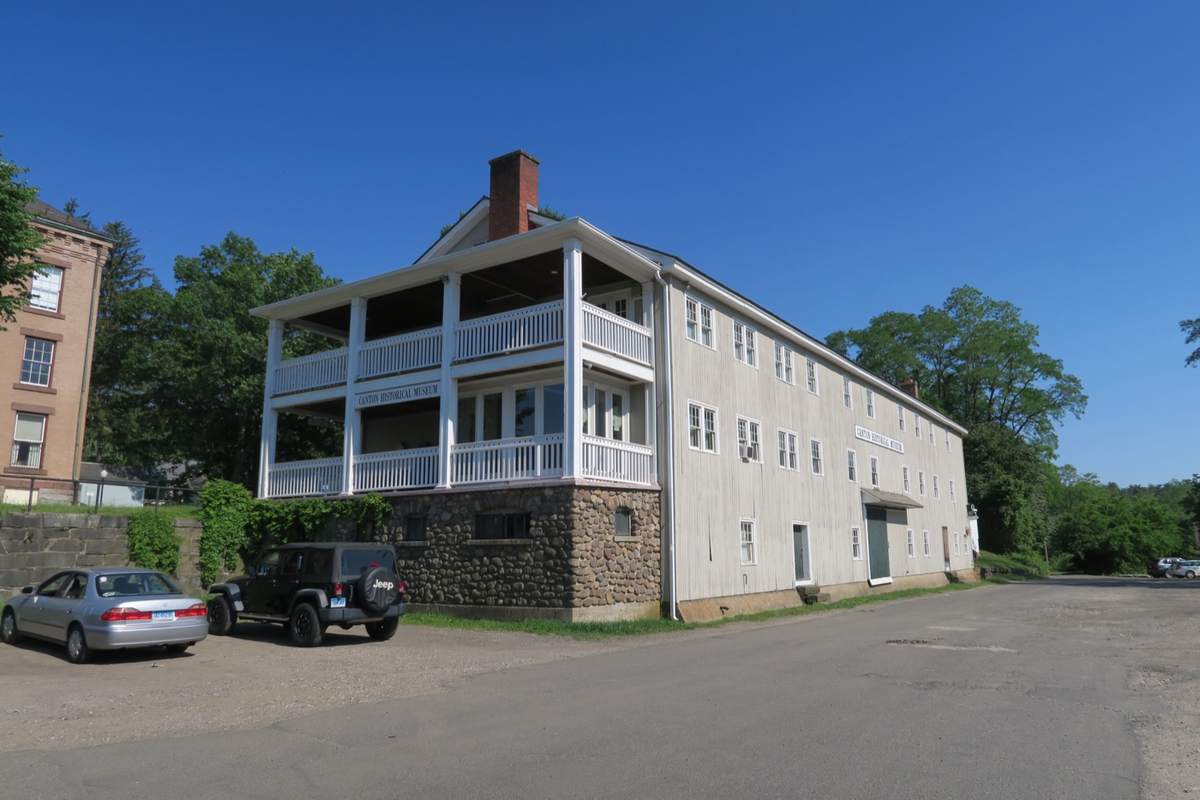
Hiring in Canton
Choosing a roofing contractor in Canton, CT
Whoever you hire in Canton should carry current license and insurance, put the scope in writing before a ladder goes up, and back the work with a warranty that survives the crew driving away. We run repair, replacement and storm-response jobs in Canton out of our Hartford base, quoted the same way for every town on the list.
What a roof replacement quote leaves out by default
A roof replacement quote and a functioning drainage system are not the same purchase, and a lot of homeowners assume the second is included in the first without ever confirming it. Gutters attached to the old fascia, hung at the wrong pitch, or simply undersized for how the new roofline sheds water are a common gap between what a homeowner expects and what a shingle-only quote actually covers.
It is worth asking directly whether gutter installation and replacement is part of the number on the table or a separate conversation entirely. Neither answer is wrong — plenty of legitimate roofing quotes are shingles and flashing only, with drainage handled as its own line item or its own contractor — but a homeowner who assumes gutters are included, only to find out otherwise once the new roof is already on, is discovering the gap at the worst possible time to negotiate it.
The same question is worth asking about downspout placement and capacity, not just the gutters themselves. A roof reshaped even slightly during replacement, or a section that previously drained onto a lower roof, can change where water actually needs to go once the new system is in place, and a quote that never raises this is leaving a real design decision unaddressed.
Ice-and-water shield coverage and drainage are related in a way that is easy to overlook. Undersized or poorly pitched gutters back water up toward the eaves in exactly the conditions ice-and-water shield is meant to protect against, and a roof with excellent shield coverage but a drainage system that cannot keep up is still at real risk of ice damming in a hard winter. Treating the two as connected, rather than as separate line items with no relationship to each other, produces a more honest picture of what the whole system actually needs.
Verification tools are useful, but ask if they are included
A storm damage roof inspection and an infrared roof leak detection pass are both genuinely useful tools for understanding a roof's actual condition before committing to a scope, and both are worth asking about by name rather than assuming either is automatically part of a standard estimate. Some contractors fold a basic inspection into every estimate visit as standard practice; others treat a deeper storm-damage review or an infrared scan as a separate, priced service reserved for situations where the homeowner or the contractor has a specific reason to look closer.
Neither approach is inherently better, but it changes what a homeowner should expect from a routine estimate versus what they might need to request separately. If a roof has visible storm damage, or if a leak has shown up somewhere without an obvious source, asking directly whether a more thorough inspection is available — and what it costs, if anything, beyond the standard visit — is a reasonable question that puts the decision in the homeowner's hands rather than leaving it assumed.
An infrared scan in particular is only as useful as the conditions it is performed under, since it relies on detecting temperature differences that trapped moisture creates, and those differences read most clearly under specific weather conditions. A contractor offering the service should be able to explain, in plain terms, when and why it is actually useful rather than presenting it as something every roof needs regardless of the situation.
A storm damage inspection is worth the same scrutiny. After a significant wind or hail event, it is reasonable for a contractor to recommend a closer look before deciding whether repair or full replacement makes more sense, but that recommendation should come with specifics — which sections of the roof showed signs of damage, and what those signs actually were — rather than a general statement that damage was found. A homeowner comparing two contractors' storm assessments is well within reason to ask each one to point to exactly what they saw, on the roof itself or in photographs, before deciding which recommendation to act on.
Housing built around 1977 and a town that tends to plan ahead
Canton has about 10,108 residents with roughly 86 percent owner-occupied housing — among the higher owner-occupancy rates in this part of the state — and a median home built around 1977 — a combination that tends to produce homeowners who are comparing quotes proactively, before a leak forces the decision, rather than reacting to an emergency, and a proactive homeowner is in a better position to ask for a complete scope rather than accepting whatever gets offered first.
A roof this age is old enough that a deck inspection allowance still belongs in the quote as a real, priced item, even though the framing and decking are less likely to show the kind of wear a much older house would. Flashing, sealant at penetrations, and attic ventilation are all reasonable places to expect specific answers rather than general reassurance, particularly from a homeowner who has the time to compare more than one estimate before deciding.
Ventilation deserves the same directness. A house built around 1977 predates a lot of current thinking on balanced intake and exhaust venting, and an attic that traps heat and moisture unevenly ages new shingles from the underside faster than the material's rated life would suggest, regardless of how carefully the top layer is installed. A contractor evaluating this as part of the estimate — not assuming whatever venting exists is adequate simply because it has always been there — is looking at the roof as a system rather than just a visible surface.
What the written quote should itemize
Beyond the drainage and inspection questions above, the baseline for a complete scope stays consistent. It should state tear-off versus overlay, and how any deck repair gets priced if it turns up — a per-sheet rate agreed in writing, not an open-ended allowance. It should name the underlayment product and how far ice-and-water shield extends at eaves and valleys, and it should call out flashing by location rather than one general line.
It should say plainly whether existing attic ventilation is being balanced as part of the job. Cleanup, a magnetic nail sweep, and who hauls away the old material should be named, along with who pulls the permit and manages the inspection. A payment schedule tied to completed stages, rather than full payment before work starts, protects both sides, and warranty terms — the manufacturer's material coverage and the contractor's own workmanship coverage, listed as two separate items — belong in writing rather than promised verbally and left off the page.
Fastening pattern is worth its own question as well. Most shingle manufacturers specify a minimum number of fasteners per shingle and where on the shingle they need to land, and a crew working quickly can drift from that spec without the difference being visible in the finished job. This rarely matters until a warranty claim gets filed years later and denied over an installation detail nobody discussed at the estimate stage, which is exactly why it deserves a direct question up front rather than an assumption that every crew follows the same standard.
Questions worth asking before you sign
Should I request an infrared scan even if there is no known leak? Not necessarily. It is most useful when there is already a reason to suspect trapped moisture — a stain, a musty smell in the attic, or storm damage of unclear extent — rather than as a routine add-on to a roof with no signs of a problem.
If gutters are not included, should I get them from the same contractor? Not automatically, but it is worth asking whether they offer it and comparing that number against a dedicated gutter contractor before deciding. A single crew handling both can simplify scheduling, but it does not automatically mean a better price.
How do I know if a deck allowance is reasonable for a roof this age? Ask the contractor to explain their reasoning in plain terms — what they typically find on roofs of similar age and construction — rather than accepting a number with no explanation behind it.
Is it worth paying more for a contractor who inspects more thoroughly? Often, yes, since a more thorough estimate reduces the odds of a costly surprise once the job is underway. The extra cost, if any, is worth weighing against the risk of a scope that turns out to be incomplete.
Is it reasonable to ask a contractor to price gutters and roofing separately, then decide? Yes. Asking for two numbers rather than one bundled figure makes it easier to see exactly what each part of the job costs, and there is nothing unusual about requesting that breakdown before committing to either.
Hours
Mon–Sat 7am–6pm
Calls are answered Mon–Sat 7am–6pm. Arrival windows are agreed on the call, and storm damage gets priority.
Call (860) 421-6068What we handle
Roofing services we bring to Canton
-
Full new-roof installation on additions, new builds and full tear-offs.
See details → -
Complete removal and replacement of a worn or storm-damaged roof, from deck inspection through final cleanup.
See details → -
Section or full-roof shingle replacement matched to existing coursing so the repair doesn't stand out from the street.
See details → -
Replacing rotted or delaminated plywood decking discovered during a tear-off, before new shingles or underlayment go down.
See details → -
Reframing a low-slope or flat section to a working pitch so water sheds instead of pooling and leaking.
See details → -
Sistering rafters and reinforcing framing that has sagged under snow load or years of undersized original construction.
See details →
Where we go
Hartford and the surrounding towns
Hartford is the base; these are the neighboring communities our crews cover.
- West Hartford, CT
- East Hartford, CT
- Wethersfield, CT
- Newington, CT
- Bloomfield, CT
- Windsor, CT
- South Windsor, CT
- Rocky Hill, CT
- Manchester, CT
- New Britain, CT
- Glastonbury, CT
- Farmington, CT
- Avon, CT
- Simsbury, CT
- Berlin, CT
- Bristol, CT
Hiring in one of these towns?
A separate guide for each town on what to check before you sign with any roofing contractor there — license and insurance, written scope, and what the warranty actually covers.
Request a quote
Not an emergency? Send the details.
For anything urgent, calling is faster — the phone is answered Mon–Sat 7am–6pm. Use this for scheduled work: inspections, estimates, or a replacement you want priced.