Roofing service in West Hartford, CT
What roofing work on West Hartford homes usually involves, and how to arrange it.
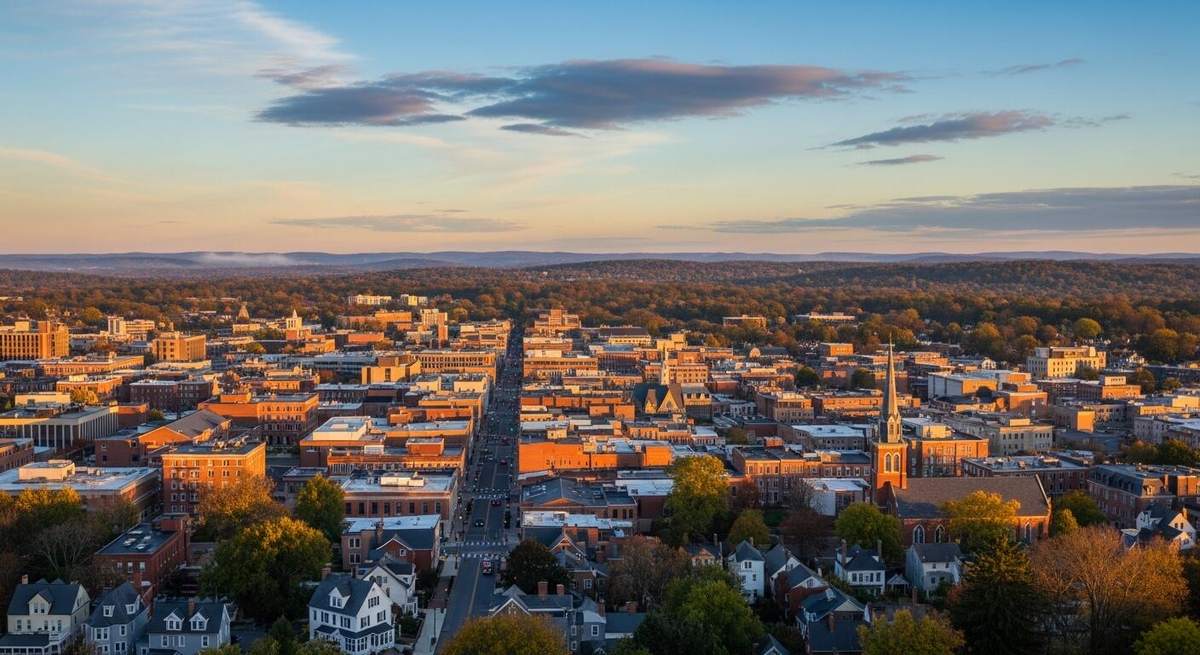
Covering West Hartford
Roofing work in West Hartford, CT
West Hartford is a short drive from Hartford, and the crews, the materials, and the fixed-price quote are the same ones Hartford gets. Storm damage and active leaks take priority over scheduled work; replacements and inspections get booked around what's already on the schedule.
What the roofs are like in West Hartford
About 63,809 people live in West Hartford, with a median household income near $125,616 and a median home built around 1955 That build year sits close to Hartford's own median of 1953 — the two places grew up in roughly the same construction wave, even though one is now a much higher-income market than the other. The income gap is worth noting because it changes what a re-roof conversation looks like in practice: the underlying framing problems are similar to what shows up on an older roof anywhere in the area, but the range of materials a homeowner here is willing to consider is wider.
Roughly 68 percent of homes in town are owner-occupied, which leaves a real share, close to a third, in rental hands. That split matters more than the raw age of the roofs, because it changes who is actually deciding on a re-roof and what they're optimizing for — a homeowner planning to stay for decades and a landlord weighing a rental property's numbers do not reach for the same answer even when they're looking at the identical roof. Neither is wrong; they're solving different problems with the same physical structure overhead.
A house built in 1955 was not framed with today's roofing materials in mind. Rafters spaced and sized for the lighter three-tab shingles common in that era can usually still carry a modern architectural shingle, but that is a load calculation someone should check rather than assume, especially before moving to a heavier material. Homes framed in the early-to-mid 1950s more often used dimensional lumber rafters set on shorter spans than the truss systems that came later, and the original deck underneath is sometimes skip-sheathed boards rather than continuous plywood — a detail that only becomes visible, and only becomes a problem, once the existing covering comes off. Neither detail is a defect by itself — both were normal building practice at the time — but each changes what a crew needs to plan for before work starts.
The more common pattern on a roof this age is a deck that has taken on two or three coverings since the original — sometimes nailed straight over the last layer, sometimes torn off properly — and flashing details around chimneys and valleys that were correct when installed but have since been patched piecemeal rather than replaced as a system. None of that is unusual for a town built out on this timeline. It just means an inspector working a mid-1950s roof is reading a longer, less consistent history than the shingle color on top would suggest, and the condition underneath can vary sharply between two houses built the same year on the same street.
What a full re-roof turns up on a house this age
Pulling the top layer off a roof from West Hartford's construction era is when the real condition shows up. Deck boards that looked fine from inside the attic can turn out spongy at a valley where water has been finding its way past aging flashing for years, hidden by whatever covering sat on top. A full roof installation starts from a clean deck rather than layering over what's already there, which is the only way to actually see — and correct — structural issues that earlier coverings were hiding instead of solving. For a house built around 1955 — that difference between covering a problem and fixing it tends to be where the real cost and real value of the job live, more than in the shingles themselves.
Multiple existing layers change the scope before a crew even starts pulling nails. Building code generally limits how many layers of roofing can stack before a full tear-off is required, so a roof that has already been recovered once may not have the option of a simple overlay next time regardless of what a homeowner would prefer to spend. That is a code and structural-load question, not a cosmetic one — added weight from stacked layers is exactly the kind of thing that matters more on original 1950s framing than it would on a newer truss roof built to carry less redundancy.
Eave protection is another detail a full tear-off usually corrects rather than repeats. A roof built in the mid-1950s was not necessarily framed with the same ice-and-water barrier expectations that apply to a roof going on today, since that standard has changed over the decades in a freeze-thaw climate like this one. A gut reroof is the point where a deck gets that protection brought up to current practice at the eaves and valleys, rather than leaving the old exposure in place under new shingles — a detail that matters more on an older roof than a newer one, because the underlying deck has already had decades to be tested by whatever protection it did or didn't have.
Material choice is part of the same conversation. A town at West Hartford's income level supports homeowners who look past a standard asphalt reroof toward something that lasts longer or reads differently from the street. Slate is the clearest example: some homes built in this era originally carried it before a cheaper asphalt replacement went on decades ago, and a homeowner doing a full tear-off now sometimes wants to go back rather than repeat another asphalt cycle. A slate roof installation is a different scope of work entirely — heavier structural loading that has to be verified against the original framing, different flashing geometry at every penetration, and a crew skill set that has little overlap with a standard shingle job. It is worth pricing as its own option rather than assuming asphalt is the only path back to a finished roof.
Owner-occupants and landlords want different things from the same roof
Roughly two out of three roofs in West Hartford sit over the household that owns them. That household tends to think in decades: they plan to be under this roof for a long time, so a longer-lived material or a full system replacement can pencil out even at a higher upfront cost, and the decision usually involves comparing more than one bid and weighing manufacturer warranty terms against price. The remaining share, close to a third, is owned by someone who does not live there. A landlord's math runs differently — the question is usually how much serviceable life is left in what's already up there, and whether extending it is cheaper than replacing it outright, since a rental property's roof is a cost center rather than something the owner personally lives under.
That difference shows up clearly on a small multi-family building, which is common enough in a rental share this size. A three-family roof failing at one corner is a different problem for the owner than the same failure on a single-family home would be for someone living there: the owner is weighing it against rent rolls and other maintenance line items rather than personal comfort, and that changes which fix looks reasonable. Insurance and mortgage requirements can also push a rental property's roof timeline in ways an owner-occupant doesn't face in the same form, since a lender or carrier reviewing a rental unit is looking at the roof as collateral condition rather than as someone's home.
That's where a roof sealing service earns its place in the conversation. Sealing a roof that still has structurally sound decking and flashing underneath a worn top layer can add years of protection at a fraction of a full replacement's cost, which is exactly the calculation a rental property owner is running. It is not a fix for a roof that has already failed structurally — that decision comes back to a full installation — but for a roof that is aging rather than broken, sealing is a legitimate way to defer the larger expense without ignoring the problem. Recognizing which category a given roof falls into is the actual judgment call, more than the age number by itself, and it is exactly why the same build year can point two different owners toward two different jobs.
Getting a roof looked at here
The build year on its own does not tell a homeowner or landlord what condition their specific roof is in — it tells us what questions to ask once we're actually up there. A 1955 build with an unknown re-roofing history calls for a look at the deck itself, not just a count of shingle layers from the ground. An assessment on a house this age typically covers three things: how many coverings are already on the roof and whether another overlay is even an option under current code, whether the flashing at chimneys and valleys has been replaced as a system or just patched piecemeal over time, and whether the framing underneath can carry a heavier material if that's the direction an owner wants to go.
None of that is guesswork once someone is on the roof and in the attic together. What varies from house to house on the same street, even among homes built the same year, is how that history actually played out — one owner may have replaced flashing properly decades ago while a neighbor patched around the same problem for twenty more years without addressing it. That variation is the real reason a roof this age is worth a direct look rather than a guess based on the year alone, whether the eventual answer turns out to be a straightforward reroof, a sealing job that buys more time, or a conversation about going back to slate.
A homeowner planning to stay put for years benefits from that same look for a different reason: it turns a vague sense of the roof's age into a documented starting point, useful when comparing bids or deciding between a sealing job and a full replacement. For an owner managing a rental property, the same walk-through produces something closer to a maintenance record — a dated account of what condition the roof was in, which becomes useful the next time a tenant reports a problem or the property changes hands. Either way, the conversation starts from what is actually on the roof and in the attic, not from the year alone.
Hours
Mon–Sat 7am–6pm
Calls are answered Mon–Sat 7am–6pm. Arrival windows are agreed on the call, and storm damage gets priority.
Call (860) 421-6068What we handle
Roofing services we bring to West Hartford
-
Full new-roof installation on additions, new builds and full tear-offs.
See details → -
Complete removal and replacement of a worn or storm-damaged roof, from deck inspection through final cleanup.
See details → -
Section or full-roof shingle replacement matched to existing coursing so the repair doesn't stand out from the street.
See details → -
Replacing rotted or delaminated plywood decking discovered during a tear-off, before new shingles or underlayment go down.
See details → -
Reframing a low-slope or flat section to a working pitch so water sheds instead of pooling and leaking.
See details → -
Sistering rafters and reinforcing framing that has sagged under snow load or years of undersized original construction.
See details →
Where we go
Hartford and the surrounding towns
Hartford is the base; these are the neighboring communities our crews cover.
- West Hartford, CT
- East Hartford, CT
- Wethersfield, CT
- Newington, CT
- Bloomfield, CT
- Windsor, CT
- South Windsor, CT
- Rocky Hill, CT
- Manchester, CT
- New Britain, CT
- Glastonbury, CT
- Farmington, CT
- Avon, CT
- Simsbury, CT
- Berlin, CT
- Bristol, CT
Hiring in one of these towns?
A separate guide for each town on what to check before you sign with any roofing contractor there — license and insurance, written scope, and what the warranty actually covers.
Request a quote
Not an emergency? Send the details.
For anything urgent, calling is faster — the phone is answered Mon–Sat 7am–6pm. Use this for scheduled work: inspections, estimates, or a replacement you want priced.