Roofing contractor serving Middletown, CT
What to ask a roofing contractor in Middletown, CT, and what a written quote should itemize before any work starts.
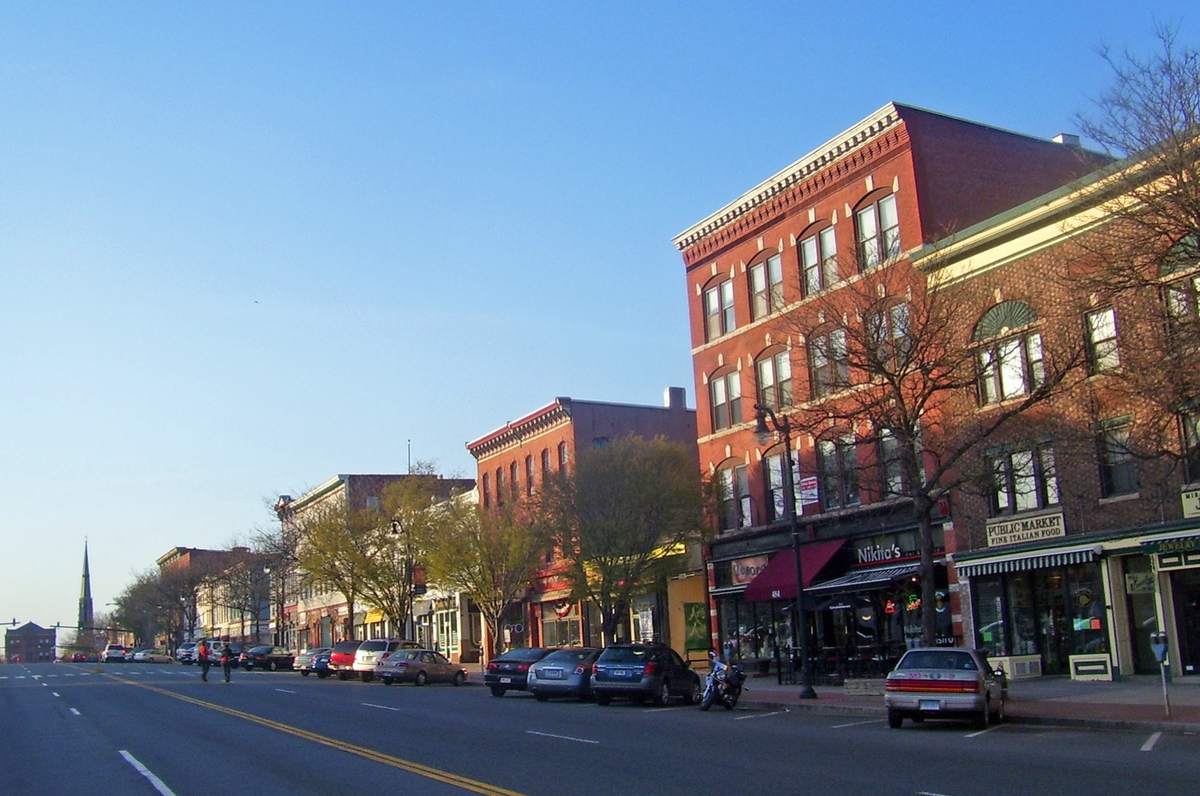
Hiring in Middletown
Choosing a roofing contractor in Middletown, CT
Whoever you hire in Middletown should carry current license and insurance, put the scope in writing before a ladder goes up, and back the work with a warranty that survives the crew driving away. We run repair, replacement and storm-response jobs in Middletown out of our Hartford base, quoted the same way for every town on the list.
The first question is what kind of roof it is, not just how old
Middletown has about 47,646 residents, the largest population among the towns in this area by a wide margin, and a housing stock that reflects that scale — a genuine mix of single-family homes, multi-family buildings, and everything in between, rather than one dominant house type. That mix matters more here than in a smaller, more uniform town, because it means the right roofing question is not simply how old a given roof is, but what kind of roof system it actually is.
A quote written as if every roof in town were a standard asphalt shingle job misses a real share of the housing stock. Flat and low-slope roofs are common on multi-family buildings and additions. Metal roofing shows up on some homes and on a fair number of outbuildings and additions as well. A contractor who asks, up front, which system is actually on the roof — rather than assuming based on the neighborhood or the house's general style — is starting the estimate from the right place.
This matters even for a homeowner who is confident their own roof is a standard shingle job, since the estimate visit itself is a reasonable place to confirm that assumption rather than take it for granted. A roof with an addition built at a different time than the original house can carry more than one system without it being obvious from the street, and a contractor who walks the whole roof, not just the section visible from the driveway, is the one actually positioned to catch that kind of detail before it becomes a surprise mid-project.
A flat roof, a shingle roof, and a metal roof are three different quotes
These are not the same job priced at different rates. A flat roof installation uses membrane materials, seam methods, and a drainage design that has nothing in common with asphalt shingles, and it should be quoted, discussed, and evaluated entirely on its own terms. A shingle replacement is the most common job in town by sheer volume, and the baseline expectations for it — tear-off versus overlay, deck condition, flashing, ventilation — are well established and worth holding any contractor to. A metal roof installation involves its own fastening approach, its own thermal-movement considerations, and its own price point that does not map cleanly onto either of the other two.
A homeowner comparing quotes across different contractors should first confirm that everyone is actually quoting the same system for the same roof. It sounds obvious, but on a property with a mixed roofline — a shingled main house with a metal-roofed addition, for instance — it is entirely possible for one contractor's number to include both and another's to quietly cover only one, with the difference in scope explaining most of the difference in price.
It is also worth asking a contractor directly about their experience with the specific system on your roof, rather than assuming general roofing experience covers all three equally well. A crew that primarily installs asphalt shingles is not automatically equipped to evaluate a metal roof's fastening pattern or a flat roof's seam integrity with the same confidence.
Lifespan expectations differ across the three systems too, and it is worth having that conversation explicitly rather than assuming every roofing material ages the same way. A well-installed asphalt shingle roof, a properly detailed flat membrane, and a correctly fastened metal roof all have different realistic service lives, and a contractor should be able to explain what to expect from each rather than offering the same generic timeline regardless of what is actually being installed. That conversation also affects how to think about price — a higher upfront cost for one system against a lower cost for another is not a fair comparison without factoring in how long each is actually expected to perform.
Housing built around 1973 and a budget that rewards a clear scope
Middletown's median home was built around 1973 — with roughly 53 percent of housing owner-occupied — a meaningful share under rental or multi-family ownership, which changes who is actually reading and approving a given quote. A landlord managing several units wants the same itemized scope a homeowner does, with clarity on which building or unit each line item applies to when more than one roof is part of the same conversation.
A roof from this era has usually been replaced at least once already, and a deck inspection allowance priced as a real per-sheet rate, rather than a vague catch-all, protects against exactly the kind of unplanned bill that hurts most when the household budget has less room to absorb a surprise. A change order discovered mid-project is a bigger problem for a tight budget than a generous one, which makes a complete, honest scope at the outset worth more here than it might in a town with more financial cushion to spare.
It is reasonable to ask a contractor directly what typically drives a change order on the specific type of roof being quoted, and how they handle it when one comes up. A contractor who has a clear, specific process — documenting the finding, pricing it before proceeding, getting sign-off rather than simply adding it to the final bill — is giving a homeowner real protection against exactly the scenario that hurts a tight budget the most.
What the written quote should itemize regardless of system
Whatever the roof type, a complete scope should state tear-off versus overlay or recover, and how any deck or substrate repair is priced if it turns up — a per-unit rate agreed in writing, not an open-ended allowance for costs discovered later. It should name the specific underlayment or membrane product, and for a shingle roof, how far ice-and-water shield extends at the eaves and valleys. It should call out flashing by location rather than one general line, and it should say plainly whether ventilation is being addressed as part of the job.
Cleanup, disposal of the old material, and who pulls the permit should all be named. A payment schedule tied to completed stages of work, rather than full payment before anything starts, protects both sides, and warranty terms — the manufacturer's material coverage and the contractor's own workmanship coverage, listed as two separate items — belong in writing rather than promised verbally and left off the page. None of this changes based on which of the three systems is actually being installed; only the specific materials named in each line item do.
Fastening and attachment method is worth its own line regardless of system. A shingle roof depends on correct nail placement and count, a metal roof depends on the right fastener type and spacing to handle thermal expansion, and a flat roof depends on correctly executed seams or adhesion — three different technical requirements that all fall under the same general idea of installation quality. A quote that names the specific approach for whichever system is being installed is giving a homeowner something to actually hold the finished job to.
Questions worth asking before you sign
How do I know if a contractor actually specializes in my roof type? Ask directly, and ask what proportion of their recent work has been that specific system. A vague, general answer is less reassuring than a specific one.
Is it normal for two quotes to disagree about which system to use? It happens, particularly on a flat or low-slope section, where more than one legitimate material choice exists. Ask each contractor to explain why they recommend their particular material rather than simply accepting the recommendation at face value.
Should a landlord managing multiple units get one quote or several? One written scope covering all units is fine, as long as it clearly breaks out which line items apply to which building, so the total is not just one lump figure with no way to verify what belongs to what.
What is the biggest risk of an unclear scope on a tight budget? A change order discovered mid-project, after the old roofing is already off and there is no real choice but to pay it. A complete scope agreed to in writing before work starts, covering whichever system is actually going on the roof, is the most direct protection available against that particular outcome, on any budget.
Hours
Mon–Sat 7am–6pm
Calls are answered Mon–Sat 7am–6pm. Arrival windows are agreed on the call, and storm damage gets priority.
Call (860) 421-6068What we handle
Roofing services we bring to Middletown
-
Full new-roof installation on additions, new builds and full tear-offs.
See details → -
Complete removal and replacement of a worn or storm-damaged roof, from deck inspection through final cleanup.
See details → -
Section or full-roof shingle replacement matched to existing coursing so the repair doesn't stand out from the street.
See details → -
Replacing rotted or delaminated plywood decking discovered during a tear-off, before new shingles or underlayment go down.
See details → -
Reframing a low-slope or flat section to a working pitch so water sheds instead of pooling and leaking.
See details → -
Sistering rafters and reinforcing framing that has sagged under snow load or years of undersized original construction.
See details →
Where we go
Hartford and the surrounding towns
Hartford is the base; these are the neighboring communities our crews cover.
- West Hartford, CT
- East Hartford, CT
- Wethersfield, CT
- Newington, CT
- Bloomfield, CT
- Windsor, CT
- South Windsor, CT
- Rocky Hill, CT
- Manchester, CT
- New Britain, CT
- Glastonbury, CT
- Farmington, CT
- Avon, CT
- Simsbury, CT
- Berlin, CT
- Bristol, CT
Hiring in one of these towns?
A separate guide for each town on what to check before you sign with any roofing contractor there — license and insurance, written scope, and what the warranty actually covers.
Request a quote
Not an emergency? Send the details.
For anything urgent, calling is faster — the phone is answered Mon–Sat 7am–6pm. Use this for scheduled work: inspections, estimates, or a replacement you want priced.