Roofing service in Bloomfield, CT
What roofing work on Bloomfield homes usually involves, and how to arrange it.
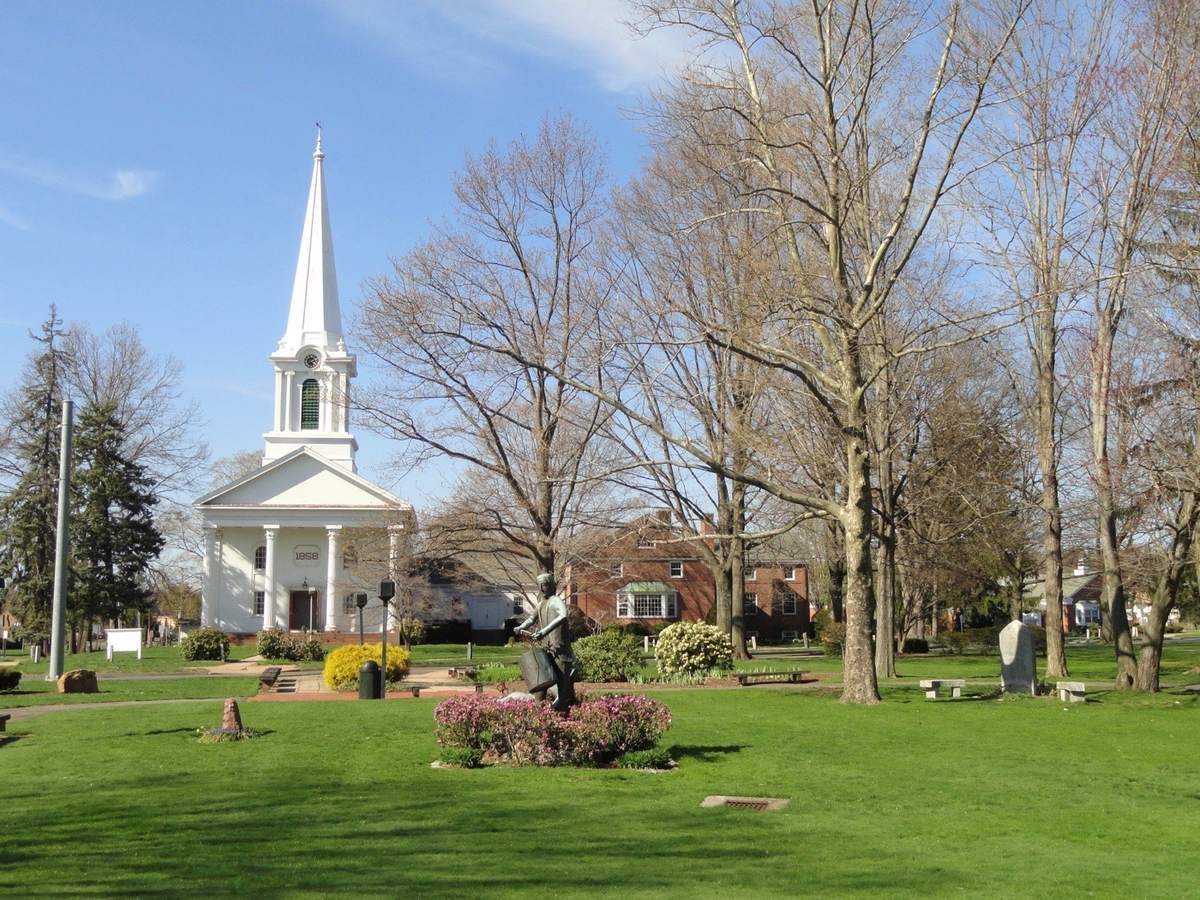
Covering Bloomfield
Roofing work in Bloomfield, CT
Bloomfield is a short drive from Hartford, and the crews, the materials, and the fixed-price quote are the same ones Hartford gets. Storm damage and active leaks take priority over scheduled work; replacements and inspections get booked around what's already on the schedule.
What the roofs are like in Bloomfield
Bloomfield has about 21,547 residents and a median household income near $97,436, with roughly 70 percent of homes owner-occupied and a median home built around 1970 — close to two decades newer than Hartford's own median of 1953 — a house that age has almost never stayed exactly as it was built. A garage bay added later, a family room extension off the back, a skylight cut into an existing slope during a kitchen remodel — additions like these accumulate over fifty-plus years, and each one is a place where the roof is not one continuous system but several different ones meeting at a seam that was never part of the original design.
None of that accumulation shows up in a description of the house's age alone. A listing that lists only the original build year tells a buyer or an inspector nothing about what got added in the decades since — only a direct look at the roof reveals how many distinct systems are actually up there.More than one roof system on the same house
A single-family home from 1970 typically started with one straightforward roofline. What's actually up there today is often more complicated, because additions built over the following decades rarely matched the original roof pitch or materials exactly. A rear addition, in particular, often gets a lower-slope or flat section rather than a full extension of the original steep roof, since matching the pitch across a new structural span is more expensive than transitioning to a simpler flat tie-in. That flat section ages on its own schedule, with its own failure points, independent of how the main roof is holding up.
Skylights follow a similar pattern. A skylight added during a later renovation is a manufactured unit set into an existing roof deck, with its own flashing and its own seal life, and it does not age at the same rate as the shingles around it. A roof skylight repair becomes relevant well before the surrounding shingles show any wear at all, simply because the seal around a skylight curb has a shorter service life than a field of asphalt shingles does, and a homeowner who only thinks about roof condition in terms of the shingles can miss that a skylight is the actual source of a slow leak for months.
None of this is a defect in how the house was built or added onto. It is simply what happens to any roof that has been modified more than once over five decades, and it means an accurate read on a Bloomfield roof this age usually has to account for at least two, and sometimes three, distinct systems rather than treating the whole thing as a single uniform surface.
Flashing at the seam between an addition and the original structure deserves particular attention, because it is doing double duty: managing water from two different roof planes that were never designed together as a single system. That transition detail is frequently where a roof from this era develops a slow, hard-to-trace leak, since the two roof sections can each look fine individually while the connection between them has quietly failed. Tracing a leak back to that kind of transition, rather than the field of either roof section on its own, is a different diagnostic problem than checking a single continuous roof plane for wear.
Materials compound the same problem. An original 1970 roof plane and a later flat addition were almost never covered in the same material, since flat and low-slope sections generally call for a membrane rather than shingles, while the steep original roof stays in asphalt. That means a single house can have two materials with two different expected service lives, aging independently, which is part of why a repair scoped only to the shingle field can leave the flat section's separate problems untouched.
Why maintenance earns its keep on a roof like this
At Bloomfield's income level, a repair-and-maintain approach tends to make more practical sense than jumping straight to full replacement the moment a problem shows up — and a house with several roof systems is exactly where that approach pays off most, because a full replacement quote on a complicated roofline gets expensive fast once flat sections, skylight curbs, and transitions between roof types are all priced in. Roof maintenance aimed at the actual weak points — the skylight seal, the flat-to-sloped transition, the flashing where an addition meets the original structure — extends the useful life of each individual system without forcing a homeowner into replacing the whole roof at once just because one piece of it is aging out.
That approach only works, though, if the maintenance is actually scoped to where problems tend to originate on a roof like this, rather than treated as a generic once-over of the shingle field. A maintenance visit that checks the main roof surface carefully but never gets up close to the flat section over the addition, or never checks the skylight seal directly, is missing the parts of the roof most likely to actually need attention on a house with this kind of layered history.
Roughly 70 percent ownership in Bloomfield means most of that decision sits with someone planning to stay in the house, which favors catching a small problem — a soft spot developing at a flat-roof seam, a skylight seal starting to fail — before it becomes water damage to a finished room below. The math is different for the remaining rental share, where a landlord weighing the same maintenance call is comparing it against a different set of priorities, but the underlying roof condition doesn't change based on who owns it.
Timing also matters differently across a roof with several systems. A skylight seal reaching the end of its service life doesn't wait for the main roof's shingles to also be due, and a flat section's membrane has its own separate clock running as well. Treating maintenance as a single annual event for the whole house, rather than as a set of separate systems each with its own condition and its own timeline, is how a homeowner ends up surprised by a failure in a part of the roof nobody had been tracking.
There's a practical order to this kind of maintenance too. Checking the transitions and penetrations first — where an addition meets the original roof, where a skylight curb meets the deck, where a vent pipe passes through either — tends to catch problems earlier than starting with the open field of shingles, since those transition points are where a roof this age is statistically more likely to be developing an issue in the first place. A maintenance visit that spends most of its time on the easiest part to inspect, the open shingle field, while rushing past the harder-to-reach transitions, is spending effort in the wrong place.
Cost is the other reason this order matters. Catching a transition or a skylight seal before it fails outright is a maintenance-scale expense; letting the same problem run until it soaks framing or damages a finished ceiling turns it into a repair-scale one, and sometimes a replacement-scale one for that section of roof. At Bloomfield's income level, that difference in scale is often the difference, in practice, between a manageable annual expense and a larger project that has to be deferred or financed some other way.
Getting the whole roof looked at, not just the visible part
A homeowner calling about one specific problem — a stain under the skylight, a soft spot on the flat roof over the family room — is usually calling about the system that happens to be failing first, not necessarily the only one worth checking. Because a house this age often has several roof systems with different ages and different materials, a useful assessment covers all of them rather than stopping once the reported problem is found and explained.
That means checking the main roof's flashing and shingle condition, the seal and curb condition on any skylights, and the membrane and drainage on any flat or low-slope sections, even when only one of those areas prompted the call. A flat roof addition that's still performing fine today can still be approaching the end of its own service life on a completely different timeline than the main roof over the original structure, and a homeowner who only ever hears about the part that's currently failing has no way to plan for what's coming next on the rest of the roof. When a flat section's membrane is actually past its service life rather than just due for maintenance, a dedicated flat roof installation on that section alone is usually the right scope — replacing just the addition's roof rather than treating it as a reason to redo the whole house at once.
The value of that fuller picture is straightforward: it turns a series of separate, surprising repair calls over several years into one coordinated understanding of a roof that was never really one thing to begin with, on a house that has had fifty years and at least one addition, sometimes more, to become what it actually is today.
None of this requires assuming the worst about every roof in town. Plenty of houses from this era have had straightforward histories, with additions built well and integrated properly from the start. The point of a fuller look is simply to know which situation applies to a specific house, rather than assuming based on age alone — a 1970-built home with one clean addition is a different roof, practically speaking, than one with three additions built by three different owners over five decades, even though both would show the same median build year on paper.
A homeowner deciding whether to schedule that fuller look doesn't need to wait for a specific symptom to justify it. Given how common layered additions are on housing stock from this era, treating a first assessment as an inventory of what's actually up there — how many systems, what condition each is in, what's original versus added later — is a reasonable starting point on its own, independent of whether anything is currently leaking.
Hours
Mon–Sat 7am–6pm
Calls are answered Mon–Sat 7am–6pm. Arrival windows are agreed on the call, and storm damage gets priority.
Call (860) 421-6068What we handle
Roofing services we bring to Bloomfield
-
Full new-roof installation on additions, new builds and full tear-offs.
See details → -
Complete removal and replacement of a worn or storm-damaged roof, from deck inspection through final cleanup.
See details → -
Section or full-roof shingle replacement matched to existing coursing so the repair doesn't stand out from the street.
See details → -
Replacing rotted or delaminated plywood decking discovered during a tear-off, before new shingles or underlayment go down.
See details → -
Reframing a low-slope or flat section to a working pitch so water sheds instead of pooling and leaking.
See details → -
Sistering rafters and reinforcing framing that has sagged under snow load or years of undersized original construction.
See details →
Where we go
Hartford and the surrounding towns
Hartford is the base; these are the neighboring communities our crews cover.
- West Hartford, CT
- East Hartford, CT
- Wethersfield, CT
- Newington, CT
- Bloomfield, CT
- Windsor, CT
- South Windsor, CT
- Rocky Hill, CT
- Manchester, CT
- New Britain, CT
- Glastonbury, CT
- Farmington, CT
- Avon, CT
- Simsbury, CT
- Berlin, CT
- Bristol, CT
Hiring in one of these towns?
A separate guide for each town on what to check before you sign with any roofing contractor there — license and insurance, written scope, and what the warranty actually covers.
Request a quote
Not an emergency? Send the details.
For anything urgent, calling is faster — the phone is answered Mon–Sat 7am–6pm. Use this for scheduled work: inspections, estimates, or a replacement you want priced.