Roofing service in East Hartford, CT
What roofing work on East Hartford homes usually involves, and how to arrange it.
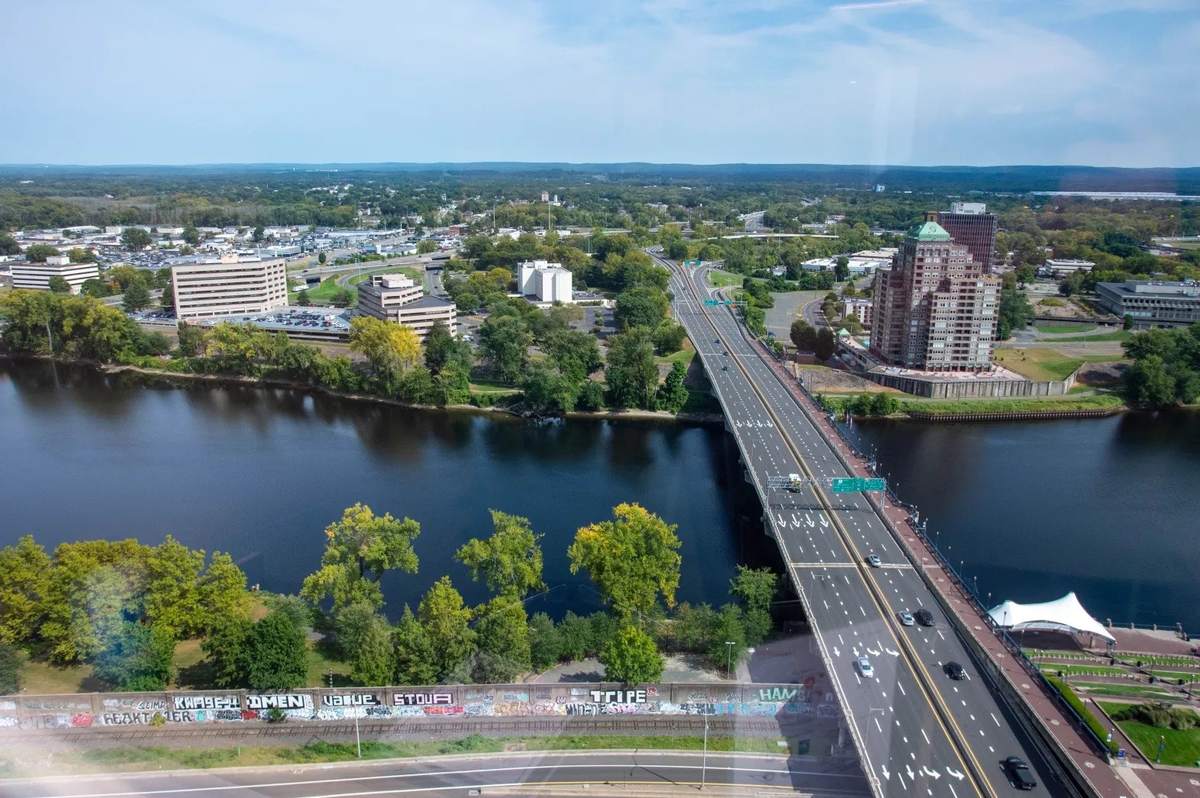
Covering East Hartford
Roofing work in East Hartford, CT
East Hartford is a short drive from Hartford, and the crews, the materials, and the fixed-price quote are the same ones Hartford gets. Storm damage and active leaks take priority over scheduled work; replacements and inspections get booked around what's already on the schedule.
What the roofs are like in East Hartford
East Hartford has about 50,798 residents and a median household income near $66,943 — modest compared to several of the towns ringing Hartford, which shapes how repair-versus-replace decisions get made here as much as the ownership pattern does. A tighter budget tends to push a roof toward a well-targeted repair over a full replacement more often than it would in a higher-income town nearby, and that preference holds for owner-occupants and landlords alike, not just the rental share of the housing stock.
Who's actually deciding on the roof
A roof over a rental unit doesn't get evaluated the way a roof over someone's own bedroom does. About 59 percent of homes in East Hartford are owner-occupied, on the lower end for the towns around Hartford, and it means a real share of the housing stock — multi-family buildings and single rentals alike — answers to a landlord's calendar rather than a resident's sense of urgency. That distinction changes almost everything about how a roof problem gets handled here, starting with which fix gets called in first.
For an owner who doesn't live in the building, a full roof repair targeting the specific failure point is usually the first move, not a full replacement. A landlord managing a roof at a distance is weighing the repair against rent income and other maintenance costs, not against how a shingle color looks from a bedroom window, and a well-scoped repair that stops an active problem without opening up the whole roof is often the fix that actually fits that budget. That's a reasonable way to manage a property. The risk shows up only when a series of individually reasonable repairs quietly stack into a roof that never gets a real structural look, because no single repair call ever triggered one on its own.
None of this means renter-occupied roofs get worse work. It means the decision-making process runs through an extra layer that a single-family owner-occupied home doesn't have — a property manager, an out-of-state owner, a shared budget across several units in the same building. A tenant reporting a stain on the ceiling is not the same as an owner standing in their own living room looking up at it, even though the physical problem on the roof might be identical. Understanding which situation applies to a given roof, before quoting anything, is part of doing the job right here, and it often means the first conversation is as much about who has authority to approve the work as it is about the roof itself.
Multi-family buildings add another layer on top of that. A roof shared by several rental units means a single failure point can affect more than one household's ceiling at once, which raises the stakes on getting the diagnosis right the first time — a repair scoped to the wrong unit's leak, on a roof serving four apartments, solves nothing for the other three.
Getting a straight answer about condition matters more, not less, when a decision has to travel through more than one person before anything gets approved. A property manager fielding a tenant complaint needs something concrete to bring to the owner, not a vague description of a stain. An out-of-state owner weighing a repair against a budget for the year needs a scope that holds up without a site visit of their own. Neither of those situations is unusual in a rental-heavy market, and both point toward the same thing: a clear, itemized account of what is actually wrong, written for someone who may never set foot on the roof themselves.
A roof this age is not on its first covering
East Hartford's median home was built around 1961 — close to Hartford's own median of 1953 — meaning the two towns grew up on a similar construction timeline a few years apart. A roof original to a house built in the early 1960s has had more than enough time to go through at least one full re-covering already, and on some buildings, more than one. That matters for anyone calling about a repair, because a roof that's already been recovered once has a different starting condition underneath the current surface than a roof still on its original materials — different fastener patterns from the last crew that worked it, different flashing history at each penetration, sometimes a deck that was never fully inspected the last time someone was actually up there rather than just walking the surface.
Roof penetrations tend to accumulate over a building's life rather than all dating to the original construction. A skylight added during a later renovation, a vent relocated when a bathroom was remodeled, a chimney re-flashed after a liner replacement — each one is a place where the roof surface meets something else, and each one ages differently than the surrounding field of shingles around it. When a roof from this era needs a roof skylight installation or an upgrade to an existing one, the surrounding roofing has usually already been through at least one cycle of its own, which is exactly why that work gets planned around the roof's actual condition rather than treated as a stand-alone add-on that ignores everything around it.
None of this is a defect specific to East Hartford. It's what happens to any roof built in this era, here or anywhere nearby, and it is a pattern rather than a flaw in any one building. What it means practically is that a call about one visible problem — a leak, a lifted shingle, a skylight that's started to weep at one corner — is worth treating as a chance to look at the roof's broader condition, not just the single symptom that prompted the call in the first place.
Solar and the split-incentive problem
Solar panels raise a version of the same landlord-versus-resident question that runs through everything else here. A solar panel roof installation is an investment that pays back over years through lower utility bills — a calculation that works cleanly for someone who owns and lives in the home, since they capture the whole benefit themselves every month. On a rental property, the incentives split: the owner pays for the panels and the roof work underneath them, but in many rental arrangements it's the tenant paying the utility bill, which means the person financing the upgrade isn't the one who sees the monthly savings show up. That mismatch doesn't make solar a bad idea on a rental property in East Hartford — some owners still pursue it for other reasons, including a roof that needs replacing anyway and utility incentives that offset part of the cost regardless of who pays the electric bill afterward — but it does mean the decision gets weighed differently than it would on an owner-occupied home nearby.
Before any of that math matters, the roof underneath has to be able to carry it. Panels add point loads and roof penetrations to a structure that, on a roof from this era, may already be on its second covering with an unknown amount of remaining service life left in it. A roof that's marginal on its own becomes a worse candidate for solar specifically, since panel mounts are a poor match for a surface that's going to need replacing again in a few years regardless.
Timing plays into that decision too. A roof already showing its age is a poor foundation for a twenty-plus-year investment like a solar array, regardless of who ends up paying the utility bill afterward. Sequencing the roof work ahead of the panels, rather than working around an aging surface to save a step, tends to be the cheaper path once the full cost of removing and reinstalling panels for a later re-roof is factored in.
Getting a roof looked at here
Given how much of the decision here runs through someone who isn't standing under the roof day to day, a clear, documented look at actual condition matters more than it might in a town with a higher owner-occupancy rate. For a landlord, that means a report that can be compared against a repair-versus-replace decision without guesswork — what's failing now, what's likely to fail next, and what a previous repair may have masked rather than solved. For a resident renting the unit, it means having something concrete to hand to a property manager instead of a description of a stain that's easy to dismiss as minor.
On a building this age, that look typically covers the same three things regardless of who owns it: how many times the roof has already been recovered, whether penetrations added after the original construction were integrated properly or just patched around, and whether the deck underneath is sound enough to support whatever comes next — another repair, a full replacement, or an addition like solar. None of those questions get answered by looking at the roof from the ground, and none of them are the same question twice, even on two buildings built the same year on the same street.
Timing that look also matters more here than the age number alone suggests. A roof already on its second covering, in a rental-heavy market with tighter repair budgets, is more likely to be carrying a patched-together repair history than a single, clean record. Sorting out what has actually been done to a roof — as opposed to what a previous owner or property manager remembers doing — is often the first real piece of work, before any decision about the next fix gets made. That history matters just as much for an owner-occupant deciding whether to finally move past a string of small repairs as it does for a landlord weighing one more patch against a fuller scope of work.
The same look also helps sort out priority when more than one issue turns up at once, which is common on a roof this age. A failing flashing detail at a chimney is a different level of urgency than a worn patch of shingles on a south-facing slope, and treating them the same — either by ignoring both or rushing to fix both at once — rarely matches how the roof is actually behaving.
Worth knowing: Roughly 59 percent of homes in East Hartford are owner-occupied — lower than most of the towns around it — which means a meaningful share of roofs here answer to a landlord's schedule rather than a resident's.
Hours
Mon–Sat 7am–6pm
Calls are answered Mon–Sat 7am–6pm. Arrival windows are agreed on the call, and storm damage gets priority.
Call (860) 421-6068What we handle
Roofing services we bring to East Hartford
-
Full new-roof installation on additions, new builds and full tear-offs.
See details → -
Complete removal and replacement of a worn or storm-damaged roof, from deck inspection through final cleanup.
See details → -
Section or full-roof shingle replacement matched to existing coursing so the repair doesn't stand out from the street.
See details → -
Replacing rotted or delaminated plywood decking discovered during a tear-off, before new shingles or underlayment go down.
See details → -
Reframing a low-slope or flat section to a working pitch so water sheds instead of pooling and leaking.
See details → -
Sistering rafters and reinforcing framing that has sagged under snow load or years of undersized original construction.
See details →
Where we go
Hartford and the surrounding towns
Hartford is the base; these are the neighboring communities our crews cover.
- West Hartford, CT
- East Hartford, CT
- Wethersfield, CT
- Newington, CT
- Bloomfield, CT
- Windsor, CT
- South Windsor, CT
- Rocky Hill, CT
- Manchester, CT
- New Britain, CT
- Glastonbury, CT
- Farmington, CT
- Avon, CT
- Simsbury, CT
- Berlin, CT
- Bristol, CT
Hiring in one of these towns?
A separate guide for each town on what to check before you sign with any roofing contractor there — license and insurance, written scope, and what the warranty actually covers.
Request a quote
Not an emergency? Send the details.
For anything urgent, calling is faster — the phone is answered Mon–Sat 7am–6pm. Use this for scheduled work: inspections, estimates, or a replacement you want priced.