Roof maintenance in Hartford: a schedule with a reason behind it
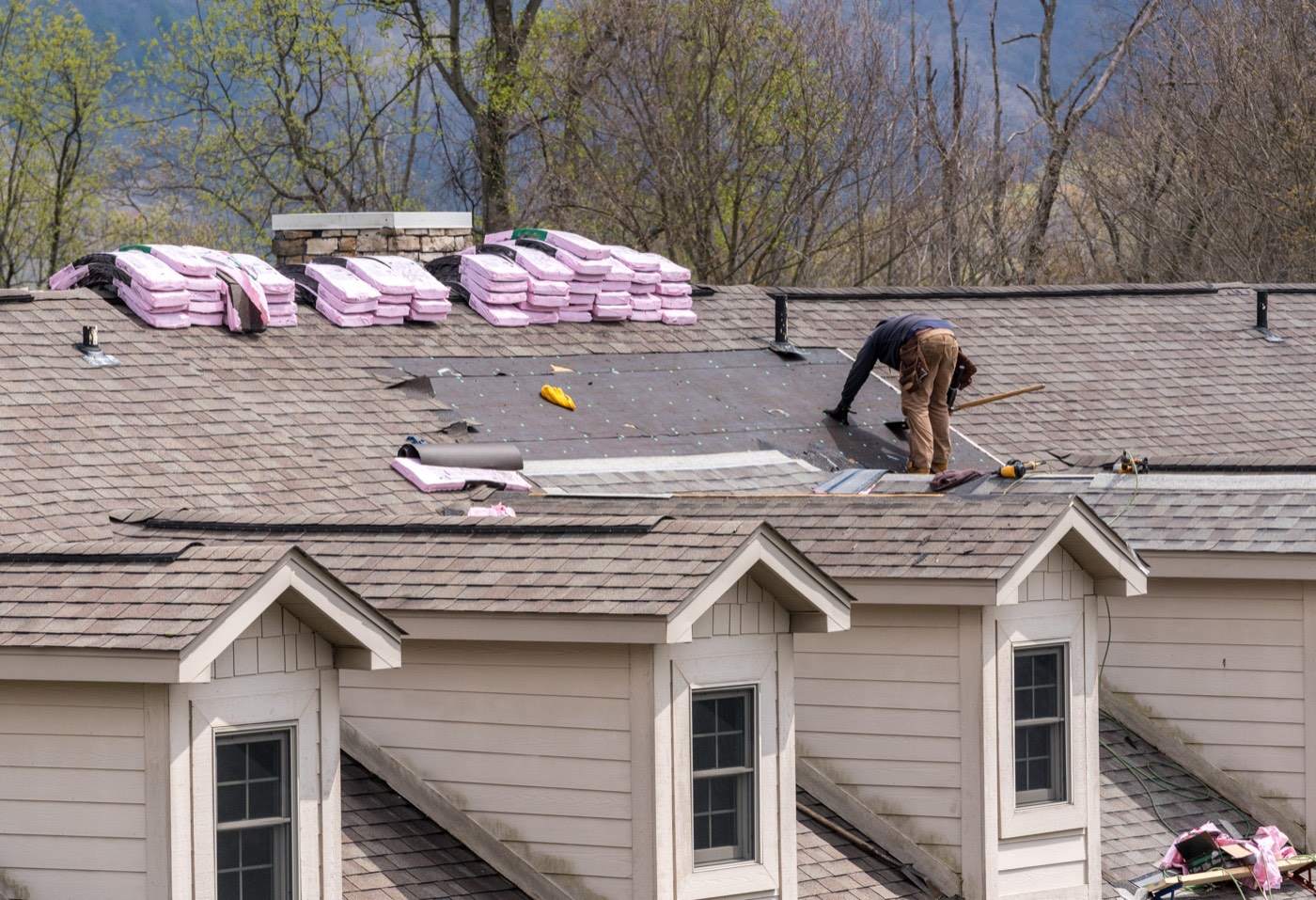
What the job involves
Roof Maintenance in Hartford, CT
What maintenance actually covers
Maintenance and repair are not the same job. Repair fixes something that has already failed. Maintenance looks for the small stuff before it gets there: a lifted tab, a fastener backing out, a flashing lap that has started to separate, or ice-and-water shield coverage that fell short of what a re-roof actually left in place. None of those items is urgent by itself. Left through a full winter, several of them together usually stop being minor.
Three systems make up what maintenance actually checks, and they do not fail on the same schedule. The roof surface itself — shingles, flashing, sealant — takes direct weather exposure and shows wear first. The attic system underneath it, insulation paired with ventilation, fails more quietly: nothing looks wrong from the ground while heat and moisture are doing slow damage to the deck above. The water path once it leaves the roof — gutters, downspouts, drainage at grade — is the piece most likely to get skipped entirely, since it sits furthest from where a leak would actually show up inside the house. A maintenance visit checks all three rather than assuming a clean roof surface means the other two are also fine.
A pre-winter check covering flashing, sealant and attic ventilation is common practice in a freeze-thaw climate, and the reasoning behind it is simple: a small failure point caught in October is generally a lighter job than the same failure point discovered in January, after a season of ice and repeated freeze-thaw cycling has had time to work on it. That logic is why maintenance gets timed ahead of the season that tests a roof hardest, rather than waiting for a symptom before doing anything.
Maintenance is not the same product as a roof inspection, even though both put someone on the roof. An inspection produces one dated, itemized report meant to stand on its own — useful before a home sale, after a specific storm, or simply as a baseline record. Maintenance does not produce that kind of formal report each visit; it is periodic upkeep aimed at catching wear before it turns into damage, not a one-time documented assessment.
Frequency and why
There is no single interval that fits every roof, because the honest answer depends on the roof's own systems, not a convenient number. A roof with heavy tree cover overhead sheds more debris into a valley or onto a lower slope than one without, and that debris holds moisture against the shingles far longer than open sun would. A roof with a known history of ice forming in one particular spot deserves attention aimed at that spot ahead of winter, rather than a generic full-roof check that treats every foot of eave the same.
Age cuts both ways. A newer roof still well inside its shingle manufacturer's expected service window needs less frequent attention than one already well past it, since materials degrade faster as they age and a fastener or seal that held fine for a decade does not automatically hold for the next one. On the other end, a roof already scheduled for replacement within a year or two gets less value from maintenance spending — the next section covers that trade-off directly.
Seasonal timing follows the weather rather than a fixed date on a calendar. A pre-winter check, ahead of the first hard freeze, tends to be the single highest-value visit in this climate, since it is the last real chance to catch a gap in flashing or ice-and-water coverage before months of freeze-thaw cycling go to work on it. A check after any storm severe enough to lift shingles or drive rain sideways matters for a different reason entirely: wind and impact damage do not wait for a seasonal calendar, and catching it early keeps one issue from turning into several by the time anyone notices from inside the house.
None of this is a promise about how often any specific roof needs a visit, since that depends on the roof rather than a fixed schedule applied the same way everywhere. What stays constant is the reasoning behind the timing: check the systems most likely to be quietly failing before the season that will expose them, and treat a storm as its own trigger, separate from the calendar.
What it defers and what it cannot
Maintenance buys time. It does not reset a clock. Resealing a flashing lap, clearing a valley, or extending a short run of ice-and-water shield are real fixes for the specific thing each one addresses, but none of them restore a shingle field that is already past its expected service life, and none of them substitute for structural repair once decking or framing is actually compromised.
A roof well past its material's typical life expectancy is a different conversation than a roof still within it, even when both show the same small symptom during a check. Maintenance on an aging roof can still be worth doing — catching a leak source before it damages the deck underneath matters regardless of how much life the shingles have left — but it is worth being direct about the difference between maintaining a roof and postponing its replacement indefinitely by treating every symptom as a small fix. At some point the small fixes stop being the cheaper option, and that point is worth naming rather than discovering by accident.
Maintenance also does not replace roof leak prevention work that is already overdue. A roof with a known gap in ice-and-water coverage at the eave, or ventilation that has never been balanced correctly, needs that specific work addressed directly. A maintenance visit will find the gap; closing it is a separate scope, not something a general check accomplishes just by identifying it.
What maintenance is genuinely good at is catching the failure points that are cheap to fix early and expensive to ignore: a bead of sealant, a fastener, a section of flashing starting to lift. What it cannot do is substitute for replacement once a roof has aged out, or for a targeted repair once damage has already reached the deck. Knowing which category a given roof falls into means actually looking at it, which is the reason maintenance and inspection exist as separate but related services rather than one combined visit.
Hours
Mon–Sat 7am–6pm
Calls are answered Mon–Sat 7am–6pm. Arrival windows are agreed on the call, and storm damage gets priority.
Call (860) 421-6068Maintenance & Prevention
Every maintenance & prevention service we cover
- Roof Inspection — Every visible roof system checked, covering shingles, flashing, ventilation and decking, with photos and a written condition report.
- Roof Ventilation Installation — Ridge and soffit ventilation added so attic air moves the way it needs to in every season.
- Roof Ventilation Repair — Repairing blocked or undersized attic ventilation that is driving ice dams or premature shingle wear.
- Roof Insulation Installation — Adding attic insulation to the level needed to keep the roof deck cold and stop ice dams.
- Roof Moisture Barrier Installation — Installing a moisture barrier under roofing materials to block vapor intrusion before it reaches the decking.
- Ice & Water Shield Installation — Self-adhering ice-and-water shield goes down at eaves and valleys, the underlayment that actually stops an ice dam leak.
- Roof Drainage System Installation — Installing or re-routing roof drainage so runoff clears the foundation instead of pooling against the house.
- Gutter Installation & Replacement — New or replacement gutters and downspouts sized to actually carry Hartford's spring runoff away from the foundation.
- Tile Roof Maintenance Inspection — Periodic inspection of a tile roof for cracked or slipped tiles and failing underlayment.
Through the year
How Hartford weather changes this job
Winter in Hartford
Ice dams build along the eaves when attic heat melts snow that then refreezes at the colder edge, backing water up under the shingles. Sustained snow load also stresses older framing and flat sections built with a lighter deck.
Spring in Hartford
Freeze-thaw cycling through late winter works ice into small cracks in flashing and sealant, so the first heavy spring rain is usually when a slow leak turns visible. Wind during spring storms lifts shingles that ice already loosened.
Summer in Hartford
UV exposure and heat cycling dry out asphalt shingles faster on south- and west-facing slopes. A roof that looked fine in June can show granule loss and curling edges by August.
Autumn in Hartford
The season for getting ahead of winter — gutters cleared, flashing checked, and a full inspection scheduled before the first hard freeze locks in whatever damage went unnoticed over summer.
What we handle
Roofing services in Hartford
-
Full new-roof installation on additions, new builds and full tear-offs.
See details → -
Complete removal and replacement of a worn or storm-damaged roof, from deck inspection through final cleanup.
See details → -
Section or full-roof shingle replacement matched to existing coursing so the repair doesn't stand out from the street.
See details → -
Replacing rotted or delaminated plywood decking discovered during a tear-off, before new shingles or underlayment go down.
See details → -
Reframing a low-slope or flat section to a working pitch so water sheds instead of pooling and leaking.
See details → -
Sistering rafters and reinforcing framing that has sagged under snow load or years of undersized original construction.
See details → -
Repairing or reinforcing damaged trusses so the roof carries its rated load through the next big snowfall.
See details → -
Roof preparation that carries a solar array's weight and penetrations without voiding either the roofing or panel warranty.
See details → -
Residential roofing service covering material selection, installation and long-term care for every roof type Hartford homes use.
See details → -
Standard three-tab or architectural asphalt shingle installation, the most common re-roof for Hartford's postwar capes and colonials.
See details → -
Hand-split or taper-sawn cedar shake installation for owners restoring or preserving a period roofline.
See details → -
New natural slate installation on colonials and capes where the original roof has finally reached end of life.
See details → -
Repair and selective replacement for Hartford's original slate roofs, matched to the existing stone.
See details → -
Standing-seam or exposed-fastener metal roofing installation, sized for New England snow load and long-term durability.
See details → -
Concrete or clay tile roof installation for owners who want a distinct roofline and decades of service life.
See details → -
EPDM rubber membrane installation for flat and low-slope sections, welded and flashed to shed standing water.
See details → -
TPO single-ply membrane installation for flat commercial and residential additions, reflective and seam-welded for a tight roof.
See details → -
Reflective shingles, ridge ventilation and insulation upgrades chosen to cut attic heat loss through a Connecticut winter.
See details → -
Diagnosis and repair for leaks, flashing failures and storm-damaged sections before small problems become full replacements.
See details → -
Locating an active leak's true entry point, which is often feet away from the stain on the ceiling.
See details → -
Every failure point contributing to a leak identified through a full roof assessment before any repair is scoped.
See details → -
Flashing and sealant work at known failure points so this winter's freeze-thaw cycle doesn't reopen last year's leak.
See details → -
Sealing seams, penetrations and transitions with roofing-grade sealant to stop water intrusion at a specific point.
See details → -
Rebuilding step and counter flashing around a chimney, the single most common source of a roof leak.
See details → -
Chimney crown cracks patched and sealed before water gets behind the flashing and into the attic.
See details → -
Installing flashing at valleys, walls and penetrations, the metal detailing that keeps water moving off the roof.
See details → -
Drip edge fitted along eaves and rakes so runoff clears the fascia instead of rotting it from behind.
See details → -
Eave flashing rebuilt where ice dams do the most damage on older Hartford roof lines.
See details → -
Resealing or replacing failed skylight flashing and glazing seals that let water track down into a ceiling.
See details → -
Cutting in and flashing a new skylight, curb-mounted or deck-mounted, without compromising the surrounding roof deck.
See details → -
Removing and resetting solar panels to repair the roofing underneath, then re-flashing every mounting point.
See details → -
Storm, hail and wind damage — stabilizing the roof first, then scoping the permanent repair.
See details → -
Repairing roof damage from a specific storm event, documented and itemized for an insurance claim.
See details → -
Replacing hail-bruised or fractured shingles identified during a post-storm inspection, matched to the existing roof.
See details → -
Resetting or replacing shingles lifted or torn loose by high wind before the next storm gets underneath them.
See details → -
Post-wind-event inspection finding lifted shingles and compromised seals before they turn into an active leak.
See details → -
Roof condition documented after a storm and written up for an insurance adjuster before repairs begin.
See details → -
Steam removal of active dams plus the ventilation and shield work that stops the next one.
See details → -
Raking or shoveling heavy snow load off a roof before it exceeds the structure's rated capacity.
See details → -
Every visible roof system checked, covering shingles, flashing, ventilation and decking, with photos and a written condition report.
See details → -
Ridge and soffit ventilation added so attic air moves the way it needs to in every season.
See details → -
Repairing blocked or undersized attic ventilation that is driving ice dams or premature shingle wear.
See details → -
Adding attic insulation to the level needed to keep the roof deck cold and stop ice dams.
See details → -
Installing a moisture barrier under roofing materials to block vapor intrusion before it reaches the decking.
See details → -
Self-adhering ice-and-water shield goes down at eaves and valleys, the underlayment that actually stops an ice dam leak.
See details → -
Installing or re-routing roof drainage so runoff clears the foundation instead of pooling against the house.
See details → -
New or replacement gutters and downspouts sized to actually carry Hartford's spring runoff away from the foundation.
See details → -
Periodic inspection of a tile roof for cracked or slipped tiles and failing underlayment.
See details → -
Flat and low-slope roofing for Hartford-area commercial buildings, from new membrane installs to restoration and waterproofing.
See details → -
A commercial building gets a new flat roof, membrane selected for the building's use and traffic.
See details → -
Patching or resealing a failed section of flat roof membrane before ponding water finds its way inside.
See details → -
Full tear-off and replacement of an aged flat roof membrane that has outlived its service life.
See details → -
Membrane waterproofing for low-slope sections that don't shed water fast enough for standard shingle roofing to work.
See details → -
Waterproofing a commercial flat roof at seams, penetrations and parapet walls where leaks actually start.
See details → -
Applying an elastomeric, silicone or acrylic roof coating to extend the life of an existing commercial membrane.
See details → -
A reflective thermal barrier coating applied to a metal roof to cut cooling load and slow corrosion.
See details → -
Restoring an aging commercial roof system to extend its service life without a full tear-off and replacement.
See details → -
Infrared scanning of a commercial roof to locate trapped moisture under the membrane before it spreads.
See details →
Where we go
Hartford and the surrounding towns
Hartford is the base; these are the neighboring communities our crews cover.
- West Hartford, CT
- East Hartford, CT
- Wethersfield, CT
- Newington, CT
- Bloomfield, CT
- Windsor, CT
- South Windsor, CT
- Rocky Hill, CT
- Manchester, CT
- New Britain, CT
- Glastonbury, CT
- Farmington, CT
- Avon, CT
- Simsbury, CT
- Berlin, CT
- Bristol, CT
Hiring in one of these towns?
A separate guide for each town on what to check before you sign with any roofing contractor there — license and insurance, written scope, and what the warranty actually covers.
Straight answers
Common questions about roofing costs and service
How much does it cost to remove ice dams from a roof?
We don't have a flat number for that, because cost tracks how established the dam already is and how the roof section needs to be accessed, not a standard per-job rate. A dam caught in its first day or two is a smaller job than one that has had weeks of freeze-thaw cycling to build up, and a steep or hard-to-reach section of roof takes longer to work safely than a simple eave line. Our <a href="/ice-dam-removal/">ice dam removal</a> page covers the method itself in more depth, which is a more useful starting point than a number we can't stand behind sight unseen.
Is ice dam removal worth it?
Usually, yes, once a dam is already backing water up under the shingles — leaving it alone means the ice ridge keeps growing and meltwater keeps finding new paths past the shingle line while it does. What removal does not do is stop the next dam from forming, since the ice itself is a downstream result of heat escaping the attic below it. Removal addresses the immediate risk sitting on the roof; the fix for the pattern repeating lives in the attic, not at the eave.
Does homeowners insurance cover ice dam removal?
That depends on the policy and, often, on how the underlying cause gets classified. Sudden interior damage from ice backing water up under the shingles is sometimes treated differently than damage attributed to a maintenance issue a homeowner could have addressed sooner, and we're not in a position to tell you how your specific policy reads. That's a conversation for your adjuster rather than us. Where we can help either way is a dated, itemized <a href="/roof-inspection/">roof inspection</a> report, which tends to carry more weight with an adjuster than a description given after the fact.
What is the average cost of a new slate roof?
We don't have a verified figure for that, and average cost is one of those numbers that varies enough by roof — pitch, complexity, and how much flashing and structural work goes in alongside the slate itself — that a single figure would undersell some jobs and overstate others. What we can say is that slate is priced on a different basis than an asphalt reroof from the start: the material, the specialized labor needed to install it correctly, and the copper flashing detail work slate roofs typically require all add up differently than a standard shingle job. If slate is genuinely on the table, a quote against the specific roof is the only number worth trusting.
Request a quote
Not an emergency? Send the details.
For anything urgent, calling is faster — the phone is answered Mon–Sat 7am–6pm. Use this for scheduled work: inspections, estimates, or a replacement you want priced.